One Airplane. Seven Decades. A Story That Refused to End.
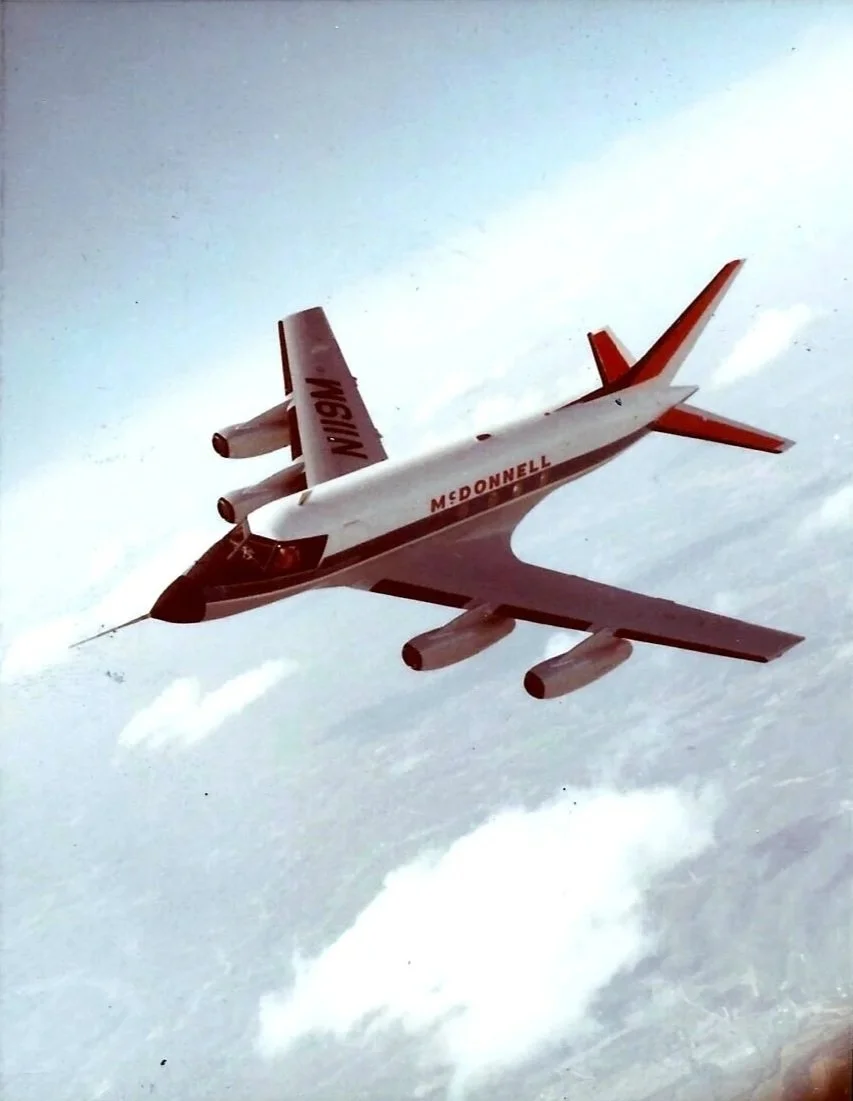
On February 11, 1959, a small four-engine jet lifted away from McDonnell Aircraft’s flight line in St. Louis for the first time.
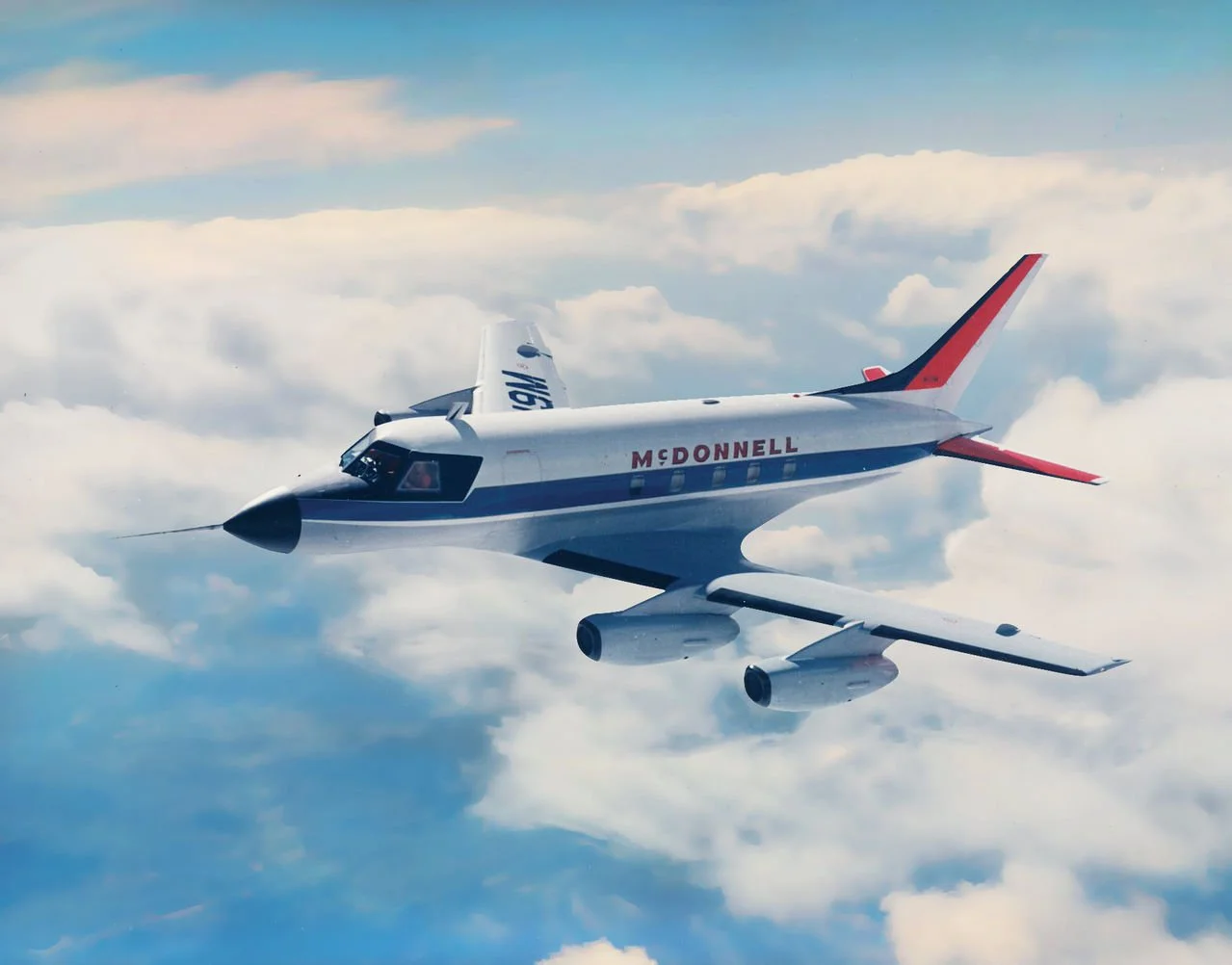
It looked like a miniature airliner, with four engines suspended beneath a swept wing, a sharply pointed nose, and the unmistakable proportions of an airplane designed by a company known for military fighters. Yet the Model 119 was neither an airliner nor a combat aircraft. It was McDonnell’s ambitious attempt to enter an entirely new market, one that was only beginning to exist: high-speed jet transportation for military leaders, corporations, and private travelers.
Only one was built.
It did not win the military contract for which it had been created. It did not enter commercial production. It never carried a paying passenger in scheduled airline service.
Instead, it became a corporate transport, a sales demonstrator, an aviation safety research aircraft, an abandoned curiosity, the subject of lawsuits and attempted restorations, and eventually one of the most remarkable survivors of the early Jet Age.
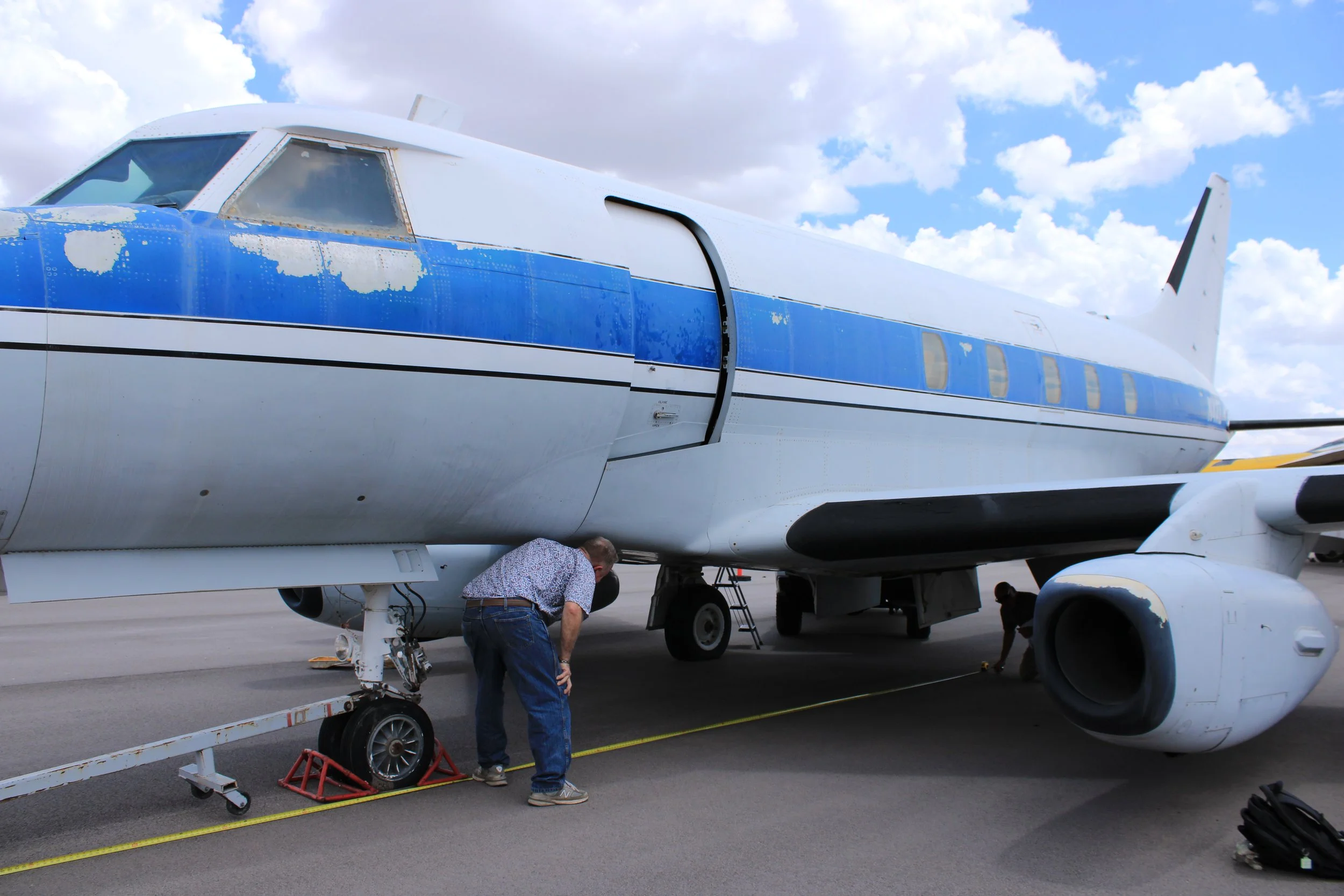
Today, the sole McDonnell Model 119/220 remains at El Paso International Airport. Its continued existence is extraordinary. Its history is even more so.
The history of the mcDonnell model 220
Thirty-Four Ways to Build an Airplane
Preliminary design studies began during the spring of 1957.
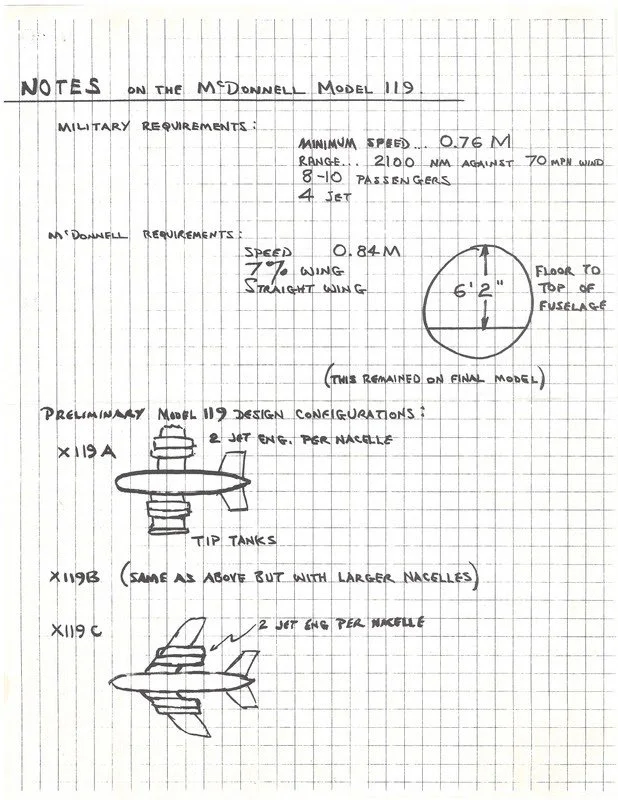
The surviving engineering notes show that the familiar Model 119 was not the first configuration McDonnell considered. The design team investigated at least 34 arrangements before settling on the airplane that was eventually built.
Hand-drawn studies identified proposed variants including the X119A, X119B, X119C, X119D, X119E, and X119G. Some placed two engines together in each nacelle. Others explored tip tanks, different tail arrangements, and alternative engine locations.
The final configuration used a low, swept wing with four engines carried individually in pods beneath it.
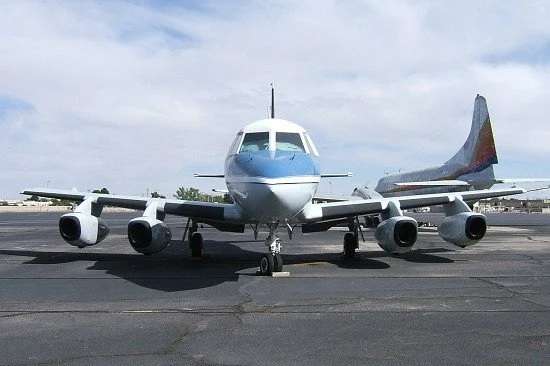
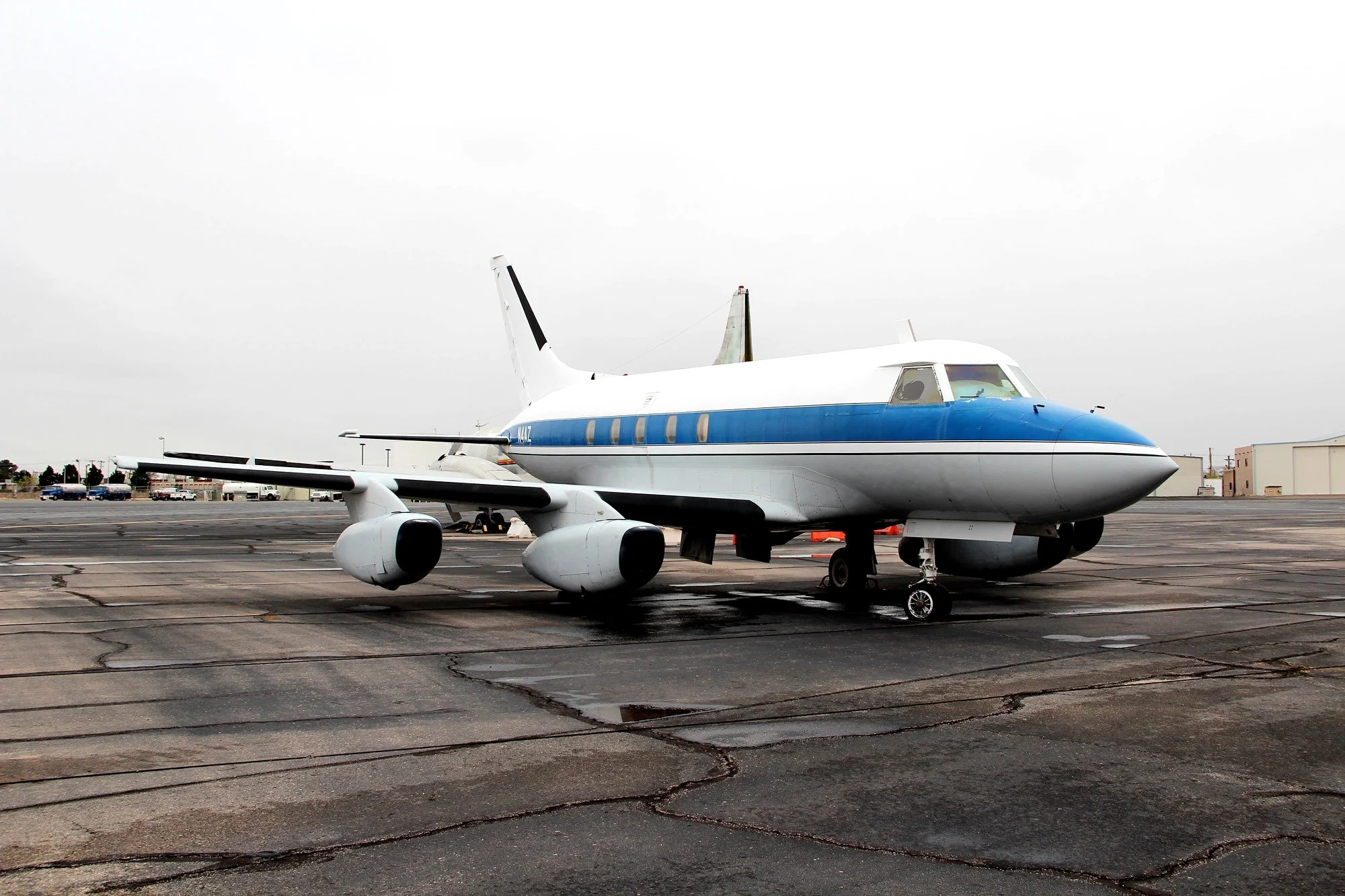
This gave the Model 119 an appearance unlike any other business aircraft. It resembled a scaled-down jetliner, but its pointed nose, compact fuselage, and broad cockpit windows gave it the character of a military aircraft. One later observer described it as looking more like a fighter-bomber than a business jet.
The choice of four separate engine pods was deliberate.
McDonnell believed that separating the engines would reduce the chance that a catastrophic failure in one would damage another. The arrangement also provided easy maintenance access, reduced wing bending loads, allowed considerable flexibility in engine selection, and offered structural advantages during a crash or wheels-up landing. The nacelle pylons were designed to help protect the wing fuel tanks and the pressurized fuselage.
The surviving design notes also show that McDonnell understood the disadvantages.
Lockheed’s competing Model 329 JetStar placed its engines higher and closer to the fuselage. McDonnell engineers acknowledged that Lockheed’s arrangement offered better protection against foreign object ingestion, less chance of engine damage during a gear-up landing, and less yaw following an engine failure.
McDonnell’s lower-mounted engines offered different advantages, including easier maintenance, improved loading flexibility, favorable pitching characteristics, lower wing bending moments, and greater adaptability for future thrust reversers and noise suppressors.
The engine placement was therefore not an oversight. It was a calculated engineering tradeoff.
McDonnell even incorporated an unusual system intended to address the risk of foreign object damage. Air jets beneath the engine inlets were designed to disrupt the vortices that could lift loose objects from the ground and carry them into the engines.
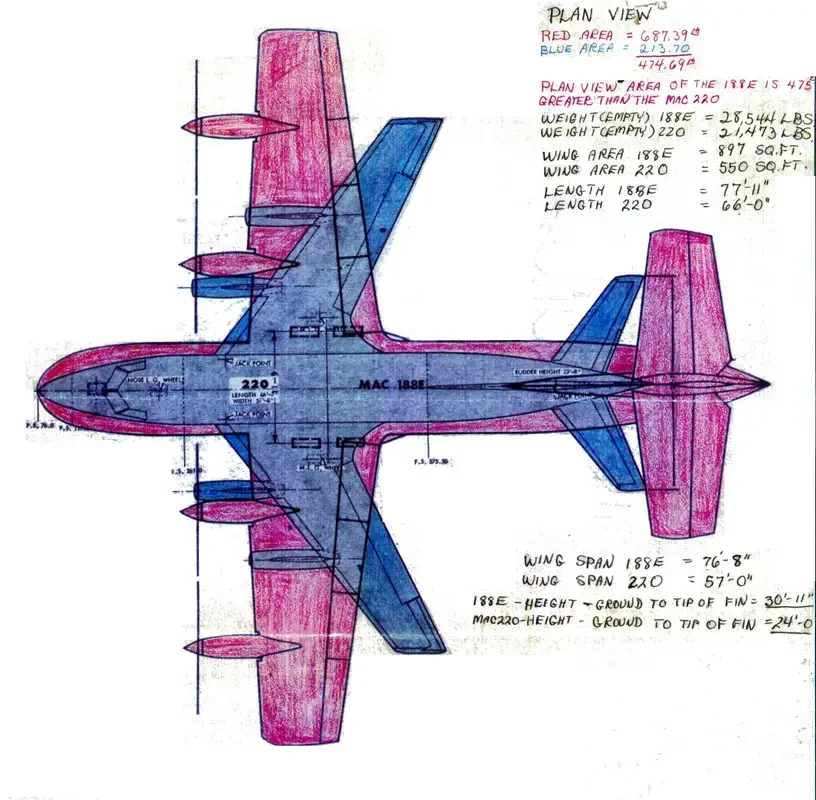
The final wing was swept 35 degrees and had an area of approximately 550 square feet. Conventional ailerons provided roll control, assisted by wing spoilers that could also function as speed brakes. Fowler flaps and split flaps improved low-speed performance.
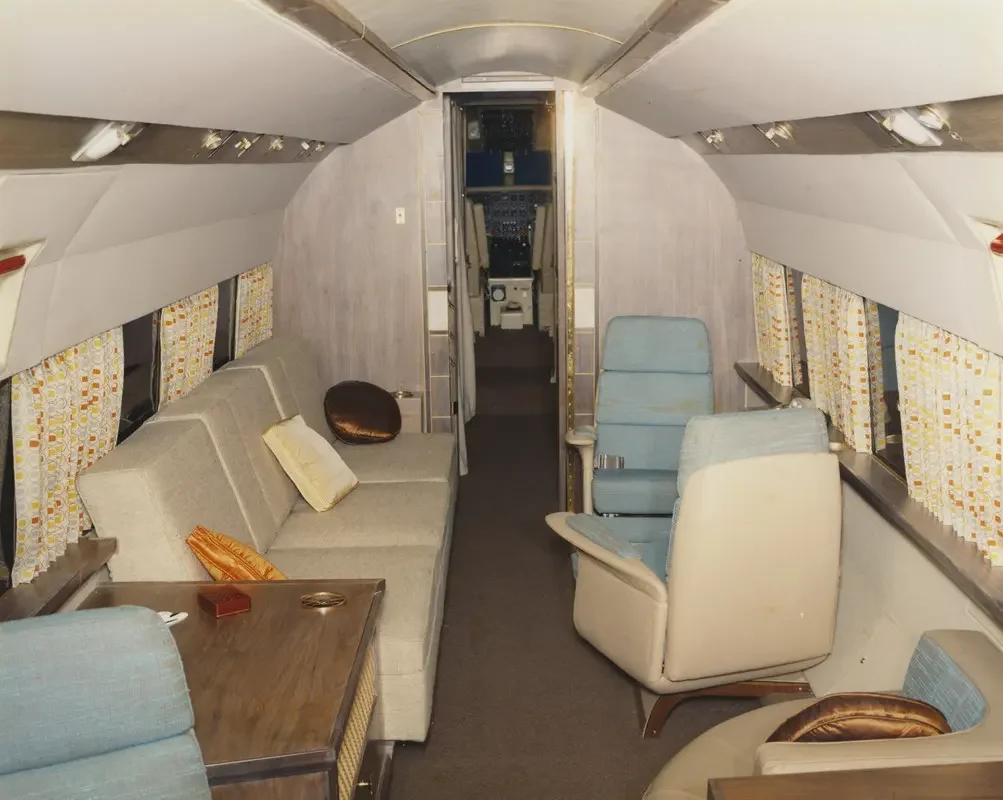
Inside, the airplane had a wide, flat floor and approximately 74 inches of headroom. Tracks in the cabin floor allowed seats, cargo fittings, and specialized equipment to be changed relatively quickly. The aircraft could be arranged for ten passengers in an executive interior, more than two dozen passengers in high-density seating, cargo transportation, medical evacuation, or a variety of training missions.
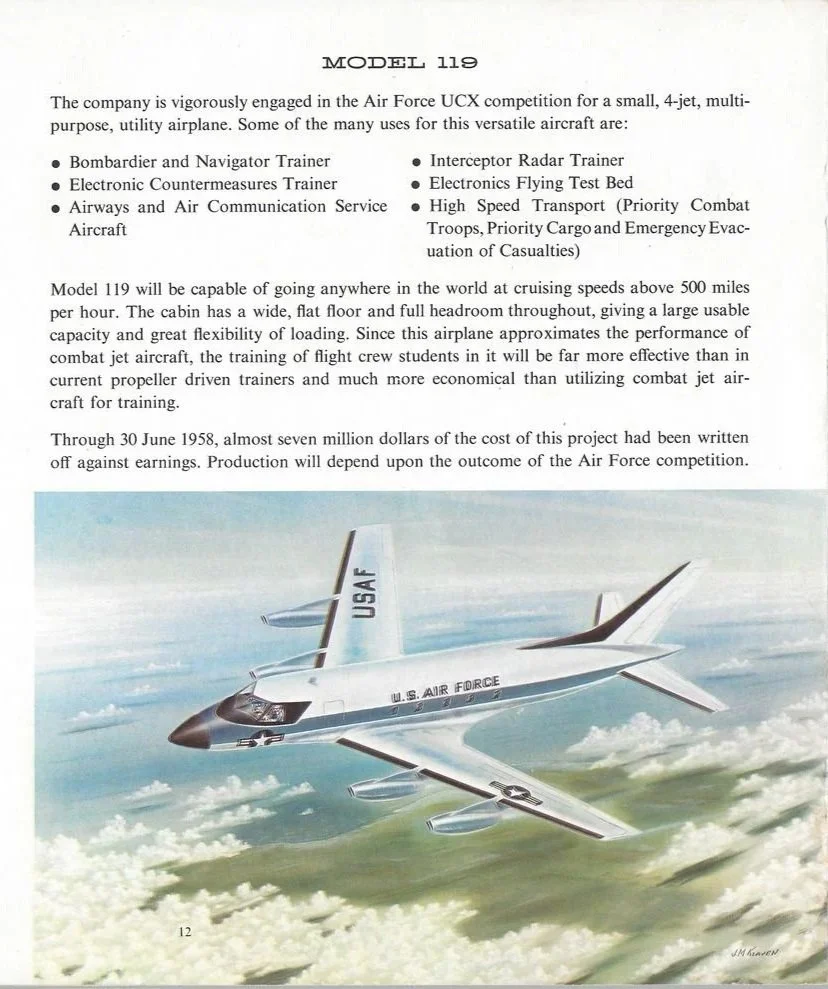
McDonnell proposed the aircraft as a bombardier and navigator trainer, an electronic countermeasures trainer, an advanced radar-navigation trainer, an airborne electronics test bed, an airways calibration aircraft, and a high-speed transport for priority troops, cargo, and casualty evacuation.
The Model 119 was not conceived merely as a luxurious private jet. It was intended to be a flexible working aircraft.
A preliminary mockup was completed in July 1957. Air Force representatives conducted an informal engineering survey that October, followed by further inspections during November and December. In March 1958, an Air Force evaluation team of approximately 45 people visited McDonnell for an official program survey.
By then, the Model 119 was no longer a speculative drawing. It was becoming an airplane.
The Jet Age Comes to McDonnell
In August 1956, the United States Air Force invited several aircraft manufacturers to participate in the UCX competition. The initials stood for Utility-Cargo Experimental, and the objective was to develop a fast, four-engine jet capable of carrying military personnel and equipment over long distances.
The Air Force envisioned a medium-sized transport able to carry approximately eight to ten passengers, cruise at high speed, and fly more than 2,000 nautical miles against a substantial headwind. It would be smaller than the new generation of jet airliners, but considerably faster and more sophisticated than the piston-powered executive and utility transports then in service.
McDonnell Aircraft Corporation was an unusual candidate.
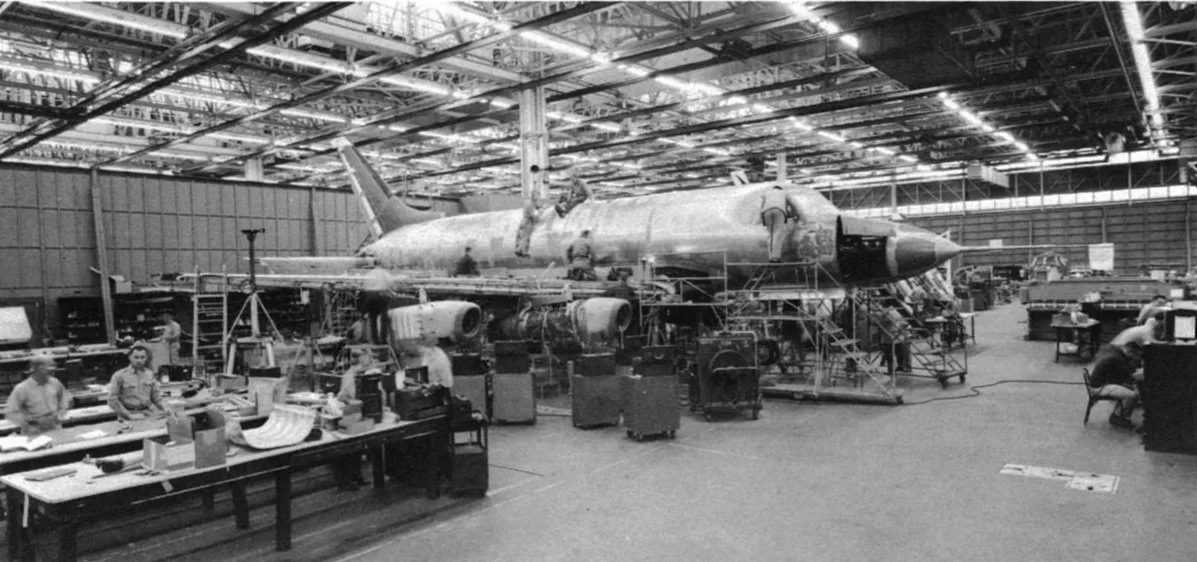
The St. Louis company had built its reputation almost entirely through military aircraft. Its fighters included the FH Phantom, F2H Banshee, F3H Demon, and F-101 Voodoo. Work was also progressing on the aircraft that would become the legendary F-4 Phantom II. McDonnell had never designed and produced a civilian airplane.
The UCX proposal offered an opportunity to diversify.
McDonnell’s leadership recognized that military jet technology might also support a domestic market for a high-speed business transport. After studying that potential market, the company committed approximately $10 million of its own money to the project.
This was no ordinary development contract. The competing manufacturers were expected to design, build, and fly their aircraft at their own expense. The Air Force was not obligated to purchase the losing designs, or even to guarantee a production order for the winner. The financial risk discouraged several possible competitors.
McDonnell entered anyway.
The project brought together an experienced team. Ralph M. Harmon served as Engineering Manager. Dr. Albert E. Lombard Jr., McDonnell’s Director of Research, became the company-wide Project Manager during the early development period. Fred I. Steele, who already had more than fourteen years of jet-aircraft design experience, was named Project Engineer. Gil G. Fleming became Manufacturing Manager.
Among the key design engineers was Steven A. Vugrich, who helped shape the airplane from its earliest stages. Vugrich died of a heart attack at only 39, not long after the prototype made its first flight.
McDonnell’s private 1965 history of the program preserved not only the story of the airplane, but also a roster of the many engineers, technicians, managers, and craftspeople whose work made it possible. The Model 119 was not an isolated experiment. It was a serious corporate undertaking supported by a substantial portion of McDonnell’s technical organization.
An Engine Problem Before the First Flight
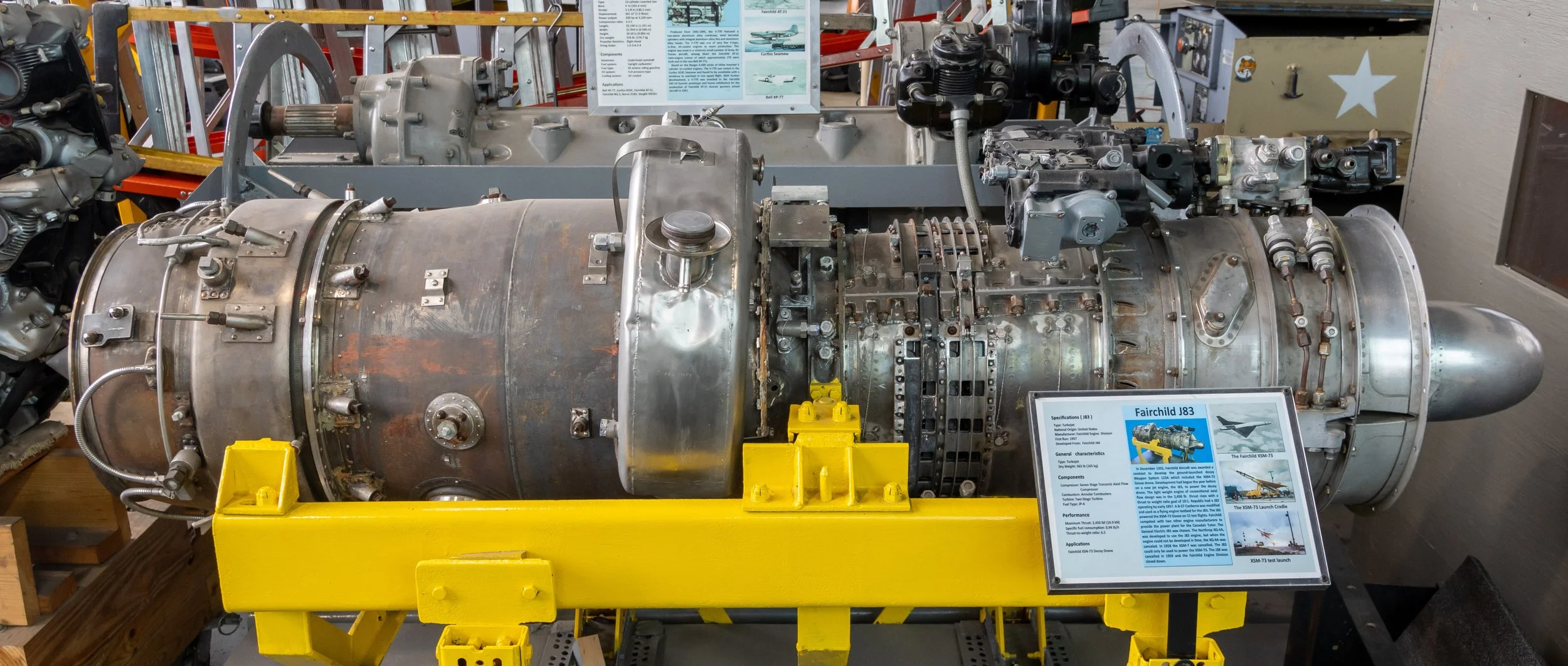
McDonnell originally intended to power the Model 119 with the Fairchild J83, a small turbojet then under development, originally intended to power cruise missiles.
That plan collapsed when the J83 program was canceled in 1958.
The company subsequently selected the Pratt & Whitney JT12 for possible production aircraft, but the JT12 was not available in time to support the prototype’s flight-test schedule. McDonnell therefore installed four Westinghouse J34 turbojets as an interim solution.
The J34 was a proven engine, but it was older, larger, heavier, and less fuel-efficient than the powerplants intended for production aircraft. The large nacelles seen on the prototype were therefore not representative of how McDonnell expected a production Model 119 or 220 to appear.
The engine problem would follow the airplane throughout its commercial life. It could demonstrate the airframe’s handling and performance, but it could not demonstrate the efficiency or appearance McDonnell expected from a finished production aircraft.
Nevertheless, the company pressed forward.
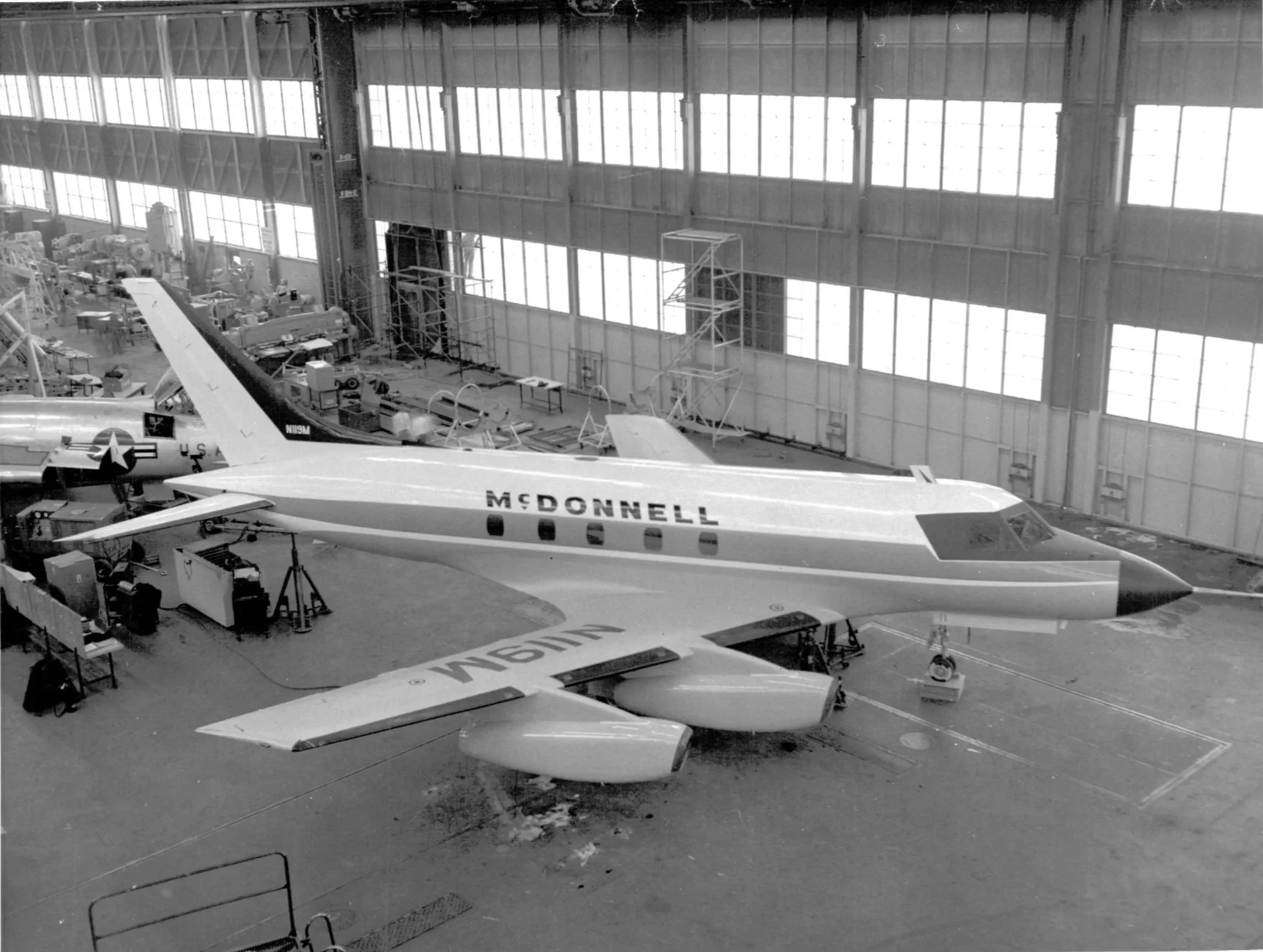
The Model 119 was rolled out of the factory on January 30, 1959. Contemporary photographs show it outside McDonnell’s St. Louis facilities in its original configuration, with a dark nose radome, four large J34 nacelles, and the registration N119M painted on the wing.
Less than two weeks later, on February 11, the prototype made its first flight.
Flight Test
McDonnell’s reports described the Model 119’s flight characteristics, versatility, and performance in highly favorable terms.
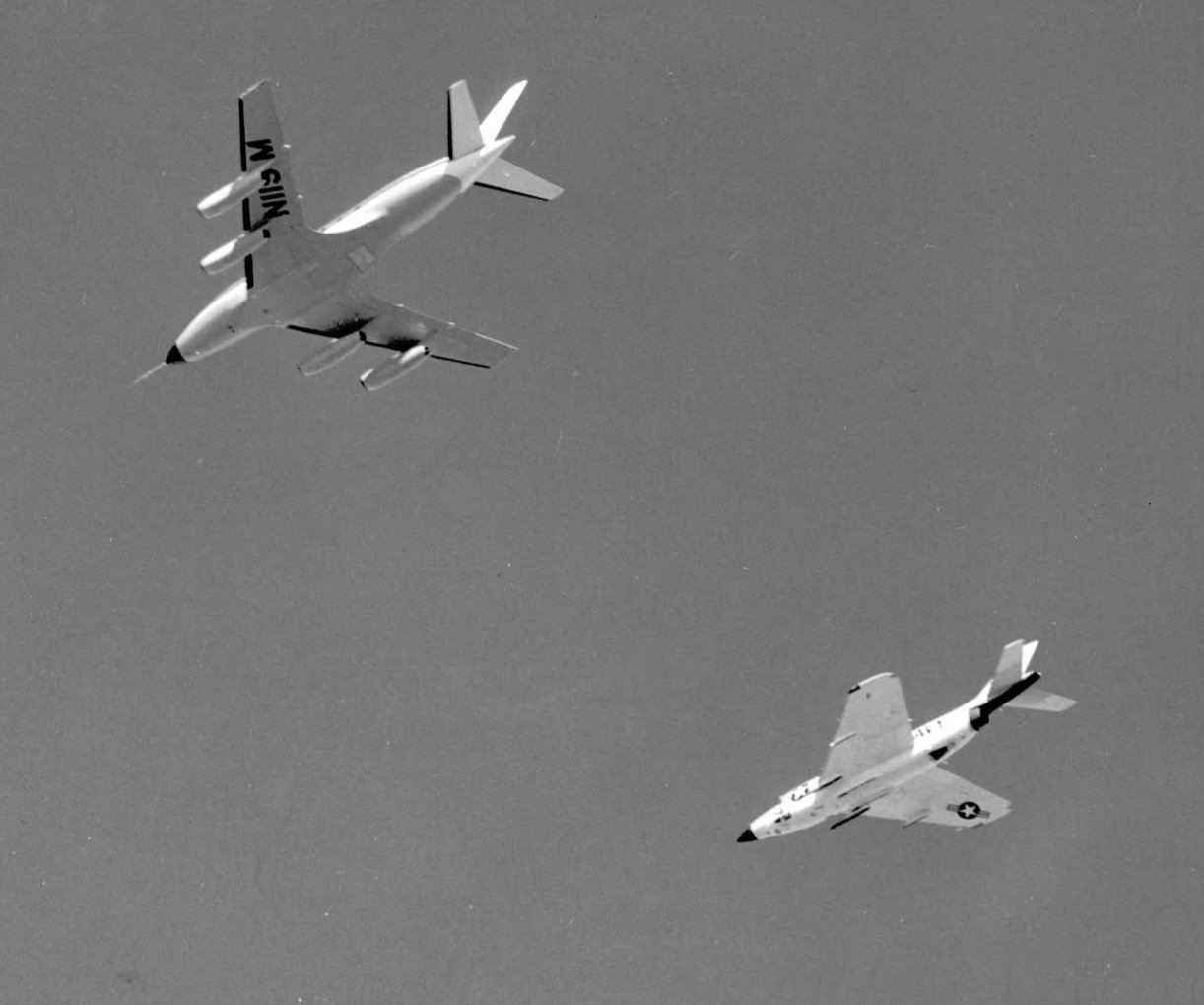
By September 16, 1959, the airplane had completed 105 flights and accumulated approximately 210 flight hours. It underwent Air Force UCX evaluation at Edwards Air Force Base in May 1959 and continued flying as McDonnell pursued both military and civilian opportunities.
The company had designed the aircraft around a demanding mission.
The original goal called for a range of approximately 2,200 nautical miles against a 70-knot headwind. Early plans anticipated cruise speeds above 450 knots and operation at altitudes around 45,000 feet. A proposed intercontinental version would have used turbofan engines, thrust reversers, and additional fuel tanks.
McDonnell also emphasized the strength of the airframe. The fuselage used multiple load paths, closely spaced structural rings, stringers, and crack-arresting features intended to prevent a single structural failure from spreading. Later pilots and engineers repeatedly described the aircraft as exceptionally strong.
Fred Steele, the original project engineer, offered perhaps the most memorable explanation decades later:
“It was way over-designed. It was designed by fighter people.”
By June 30, 1959, McDonnell reported that cumulative program costs had reached $12,607,437. The company had spent far more than the original $10 million budget, and it had done so largely without a guaranteed government order.
McDonnell’s commitment went beyond engineering. In December 1958, before the first flight, the company established a Transport Division and began organizing a commercial sales staff. Robert E. Hage, a former Boeing 707 project systems engineer, was selected to lead the division.
McDonnell was preparing not simply to test the airplane, but to sell it.
The UCX Decision
The Air Force ultimately selected Lockheed’s Model 329 JetStar, later designated the C-140.
The reason for the decision has often been reduced to a single explanation: concern that the Model 119’s low-mounted engines would ingest debris from runways or unimproved surfaces.
Foreign object damage was certainly a recognized concern, and McDonnell’s own engineers listed it as an advantage of Lockheed’s configuration. However, the surviving documents do not support the idea that one feature alone decided the competition.
The Air Force was evaluating two substantially different airplanes, two manufacturers, two engine arrangements, and two possible paths into production. Cost, logistical support, development risk, engine availability, field operation, and performance all mattered.
Whatever combination of factors determined the final selection, McDonnell’s loss had consequences far beyond the military competition.
The Air Force order was expected to provide the production volume needed to make the airplane affordable to civilian customers. Without that anchor order, McDonnell faced a difficult commercial problem. Corporate buyers wanted a firm price and confidence that the aircraft would remain supported. McDonnell needed substantial orders before it could establish a competitive price and commit to full-scale production.
The company had built a promising airplane, but it had lost the customer around which its business case had been constructed.
McDonnell nevertheless refused to abandon it.
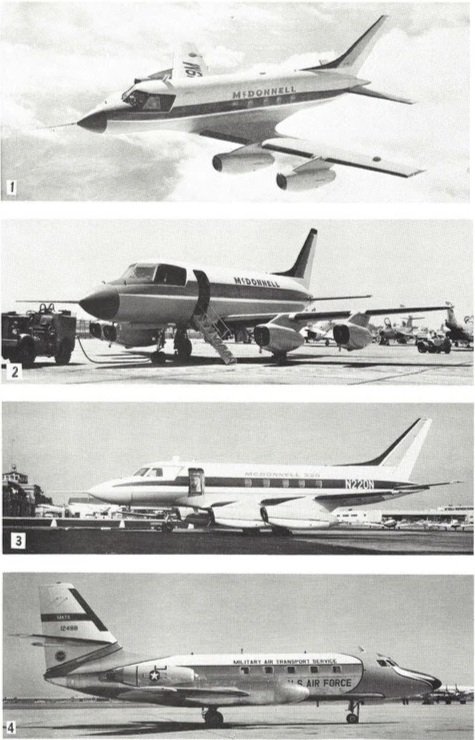
From Model 119 to Model 220
After the UCX competition, McDonnell extensively reworked the prototype for the civilian market.
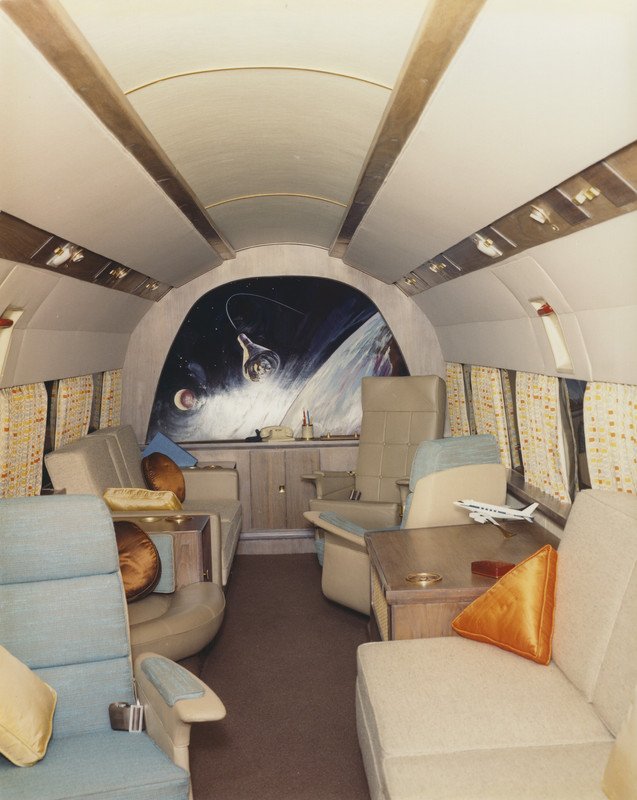
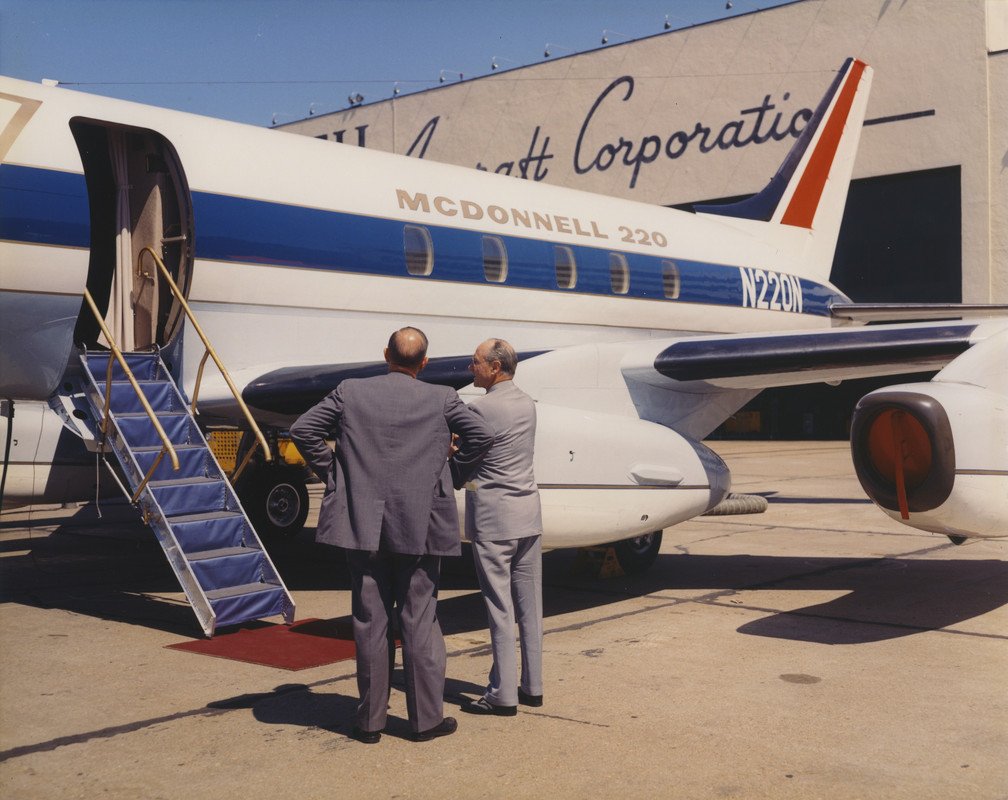
The military-style interior was replaced by a custom executive cabin. The exterior received a more polished paint scheme. Minor changes resulting from the Air Force evaluation were incorporated, and the aircraft was adapted for customer demonstrations and corporate transportation.
At the suggestion of company founder James S. McDonnell, the Model 119 designation was retired.
McDonnell Aircraft had recently entered its second twenty years in business. The aircraft was therefore renamed the Model 220.
The name represented more than a marketing exercise. It marked a shift in identity. The Model 119 had been created for a military competition. The Model 220 would be promoted as a civilian business transport.
In executive configuration, the cabin accommodated ten passengers. Contemporary sources described high-density arrangements carrying between 26 and 29. Other proposed interiors included medical evacuation layouts with stretchers and attendants, airline-style seating, cargo fittings, and specialized military training stations.
The airplane’s size was impressive for an early business jet. Passengers could stand upright through much of the cabin. It had an integral stairway, a full galley, a lavatory, a pressurized cabin, and space for serious corporate or military missions.
McDonnell promoted the 220 not simply as a faster private airplane, but as a small airliner.
A Real Contender
The surviving Model 220 Airplane Flight Manual demonstrates how far the program progressed.
Dated June 10, 1960, the manual was not a marketing brochure or preliminary proposal. It contained formal operating limitations, normal and emergency procedures, and a complete performance section with takeoff, landing, stall, climb, engine-out, and airspeed-correction charts.
The manual listed a maximum in-flight weight of 45,000 pounds, a maximum landing weight of 35,500 pounds, and a maximum operating altitude of 43,000 feet. The aircraft was certified for night and instrument flight with a minimum crew of two pilots.
Its normal operating limit was 302 knots calibrated airspeed or Mach .83, whichever was lower. Usable fuel capacity was approximately 2,485 gallons, and the pressurization system was approved for a normal maximum differential of 8.9 psi.
The performance section included data for one-engine-inoperative takeoffs, two-engine-inoperative enroute flight, go-arounds, obstacle clearance, and emergency operations. The operating procedures covered everything from the pneumatic entrance door and individual engine-start sequence to fuel dumping, emergency gear extension, smoke removal, and manual stabilizer trim.
The manual makes one fact unmistakable: the Model 220 was not a mockup, a publicity exercise, or an unfinished shell. It was developed and tested as an operational jet transport.
Certification and Commercial Ambition
McDonnell continued the certification effort through 1960.
On October 17, the Federal Aviation Agency issued the Model 220 a Class I Provisional Type Certificate and assigned the registration N220N. A provisional airworthiness certificate followed on December 13.
McDonnell’s official project history described the 220 as the first business, non-airliner type aircraft to receive that class of certificate. This is a more precise claim than the frequently repeated description of the aircraft as simply “the first business jet,” a title that depends heavily on how the category is defined.
What cannot be disputed is that the Model 220 was among the earliest aircraft developed specifically around the emerging idea of high-speed jet transportation for corporate and executive use.
McDonnell investigated nearly every conceivable path to production.
The company studied direct corporate sales, leases, charters, pool-leasing arrangements, short- and medium-haul airline service, military training roles, and sales to foreign governments. Its sales efforts extended to the Air Force, Navy, Federal Aviation Agency, commercial airlines, and hundreds of the largest corporations in the United States.
Later accounts describe extensive discussions with Pan American World Airways and a provisional proposal involving a very large, leased fleet. Whatever the exact status of those negotiations, they never became a firm production order. Pan American ultimately supported the French aircraft that became the Dassault Falcon 20.
McDonnell also considered new engines.
Production aircraft had originally been expected to use Pratt & Whitney JT12 turbojets. In May 1961, the company studied the installation of General Electric CF700 turbofans. The uncertainty surrounding engine availability once again made the investment difficult to justify.
The Model 220 was caught in a commercial stalemate.
McDonnell could not offer an attractive price without a meaningful production run. Customers were reluctant to order an aircraft without a firm price, established production line, and long-term support network. The loss of the Air Force contract had removed the volume that might have broken that cycle.
At the same time, McDonnell’s military business was expanding dramatically. The F-4 Phantom II was becoming one of the most successful military aircraft programs in history. Against that background, a single privately funded business jet with no firm production orders became increasingly difficult to defend.
The 220 had not failed as an airplane.
It had, unfortunately, failed to become a business.
McDonnell’s Own Jet
Although no production orders materialized, McDonnell continued using the Model 220.
It flew sales demonstrations and company missions and traveled throughout the United States. The aircraft appeared in California, New York, and other major aviation centers. McDonnell executives used it for corporate transportation, giving the company firsthand experience with the type of service it had hoped to sell.
The 220 reportedly performed well in that role. Its spacious interior, long range, high-altitude capability, and four-engine redundancy made it an impressive company transport.
Ironically, it was eventually replaced in McDonnell service by a used Lockheed JetStar, the aircraft that had defeated it in the UCX competition.
McDonnell continued receiving inquiries about the 220 into 1963. The company considered selling the prototype as part of a complete support package and searched for other constructive uses during 1964.
By January 1965, however, McDonnell had decided that the aircraft would never begin full production. The company approved its donation to the Flight Safety Foundation in Phoenix, Arizona.
Farewell to the 220
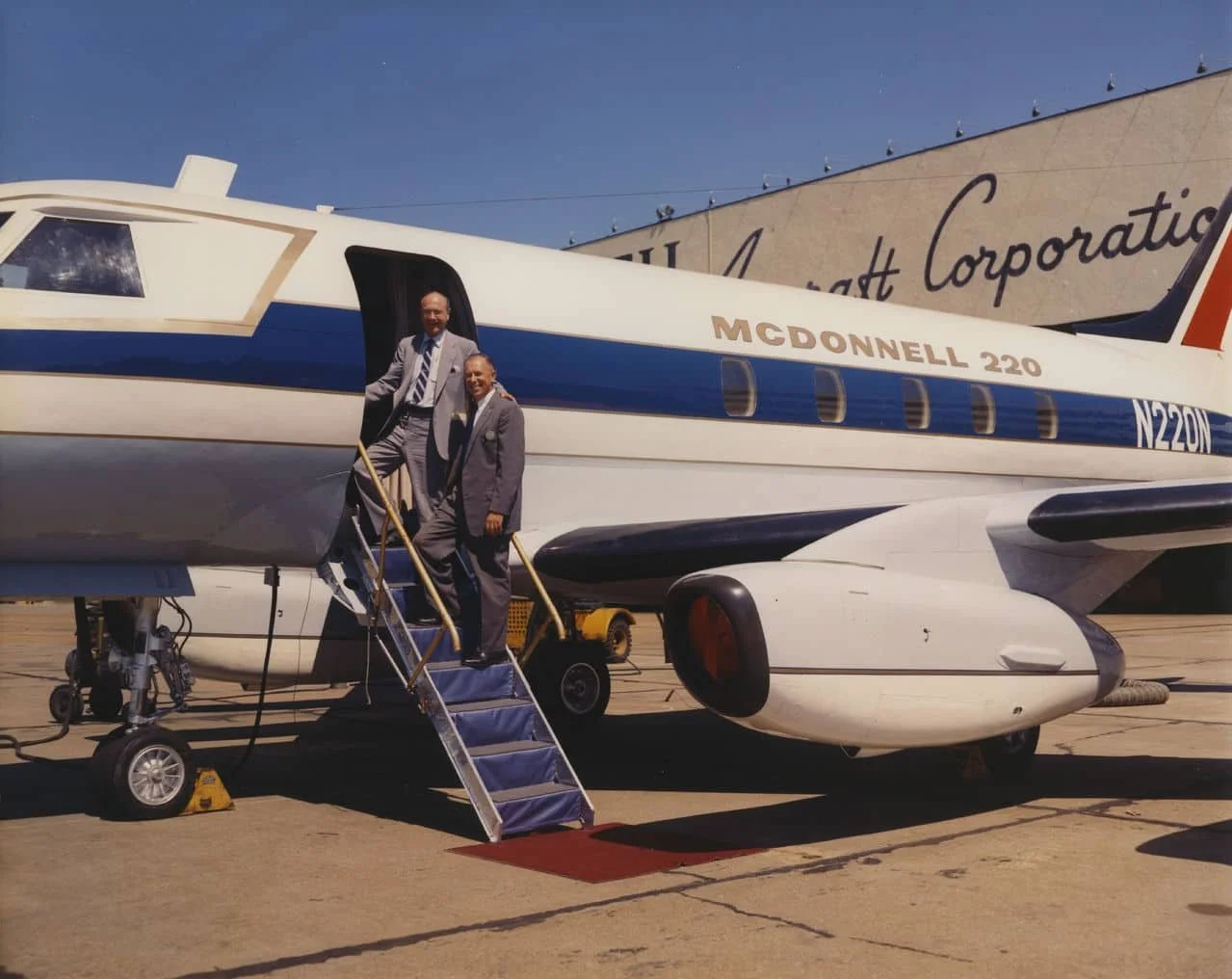
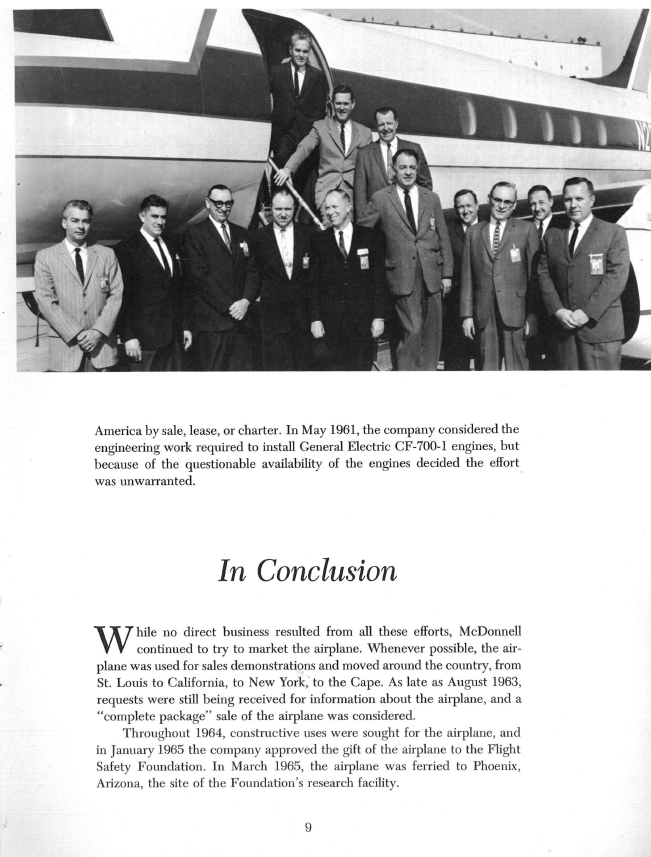
The departure of the Model 220 was significant enough that McDonnell organized a formal farewell ceremony.
A photograph published in the April 1965 issue of the company newspaper, McDonnell Airscoop, shows James S. McDonnell standing beside the aircraft with members of the project team. Those pictured included Jack Holland, Arnie Mueller, John Aldridge, John Forry, George Leach, Gil Fleming, Vido Adamo, Robert E. Hage, Frank “Buck” Rogers, Dr. A. E. Lombard Jr., Cal Wadleigh, George Mills, Jim Jarrells, and veteran inspector Lou Ashby.
On March 17, 1965, McDonnell sent members of the project team a private memento booklet commemorating the airplane and their work.
The accompanying note explained that the 220 would soon make its final departure from McDonnell’s flight ramp for delivery to the Flight Safety Foundation. It acknowledged that “a valuable portion of your life went into this fine airplane.”
At the bottom was a final instruction:
“This is a personal memento for you and not for the press.”
The booklet is now one of the most important surviving records of the program. It preserves McDonnell’s own account of the competition, engineering process, marketing effort, certification, and final disposition of the aircraft.
In March 1965, the Model 220 left St. Louis for Phoenix.
Its career with the company that built it was over.
Its more improbable life was about to begin.
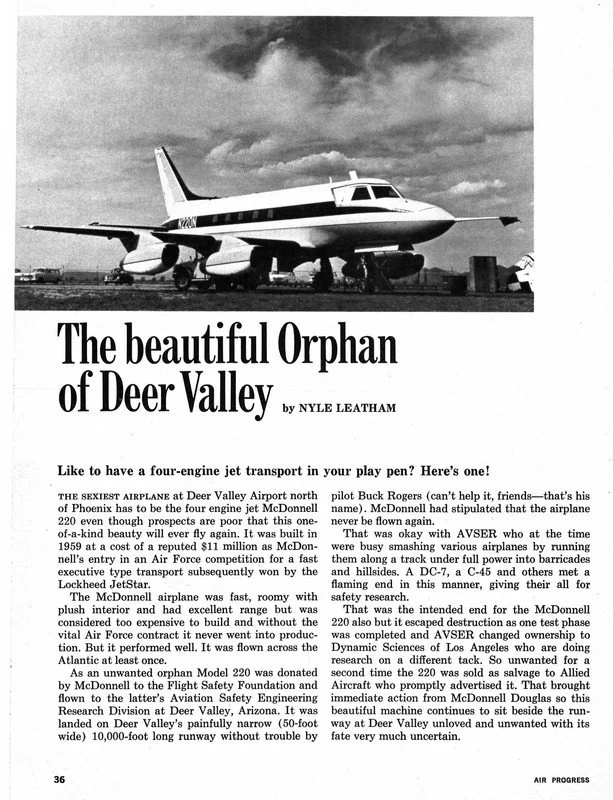
The Airplane That Escaped Destruction
The Flight Safety Foundation intended to use the 220 for research into the safety of jet transports.
Its Aviation Safety Engineering Research organization, commonly known as AVSER, conducted crash-survivability studies using aircraft, barriers, and controlled impact tests. Several airplanes met destructive ends in the course of that work.
Later accounts consistently suggest that destructive testing was contemplated for the Model 220. Some claimed that it was to be remotely flown into a mountainside. Others described plans to pressurize it until structural failure. McDonnell personnel later remembered believing that the airplane had actually been destroyed.
It was not.
The exact reason the 220 escaped remains uncertain.
One account held that the cost of installing remote-control equipment was too great. Another suggested that the aircraft was so strong that the resulting test would not provide useful data. Period reporting indicated that the relevant phase of AVSER’s research ended before the aircraft could be destroyed and that organizational changes transferred the airplane elsewhere.
The most likely explanation is that several of these factors worked together.
The Model 220 had survived the cancellation of its intended engine, the loss of its military contract, the collapse of its commercial program, and its retirement by McDonnell.
Now it survived the program that may have been intended to destroy it.
From Phoenix to Albuquerque
After its time with the Flight Safety Foundation, the aircraft passed through a succession of organizations and owners.
Period accounts place it with Dynamic Sciences of Los Angeles and later with an Arizona salvage company. Aircraft broker Richard F. Durand Jr. eventually acquired it.
In 1969, Durand arranged to move the aircraft from Phoenix to Albuquerque, New Mexico.
The disposal agreement reportedly contained restrictions intended to prevent the 220 from flying again. Durand nevertheless ferried it to Albuquerque. Later accounts reported that the flight resulted in litigation and a 30-day suspension of his pilot certificate.
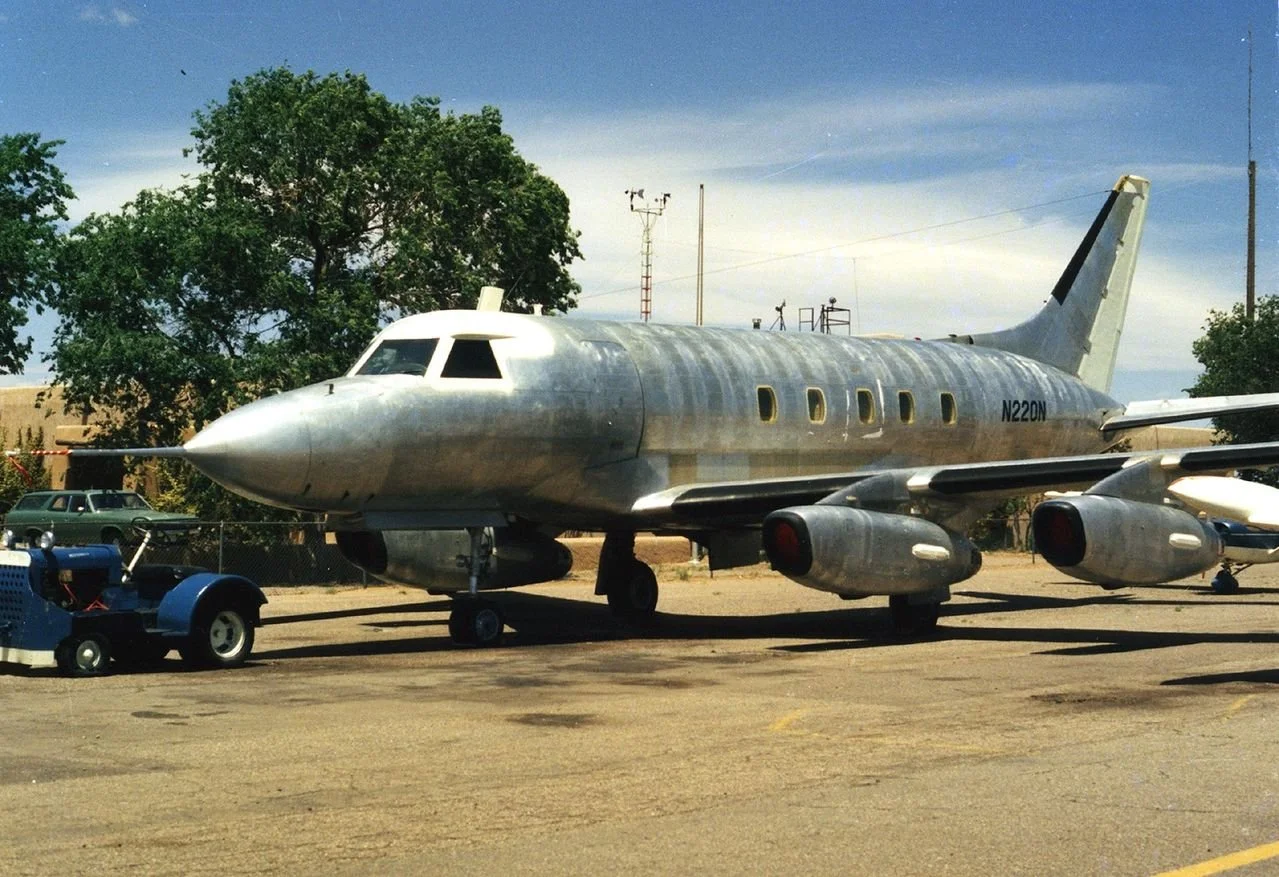
The airplane then spent years sitting at Albuquerque International Airport, where it became known locally as the “Baby 707.”
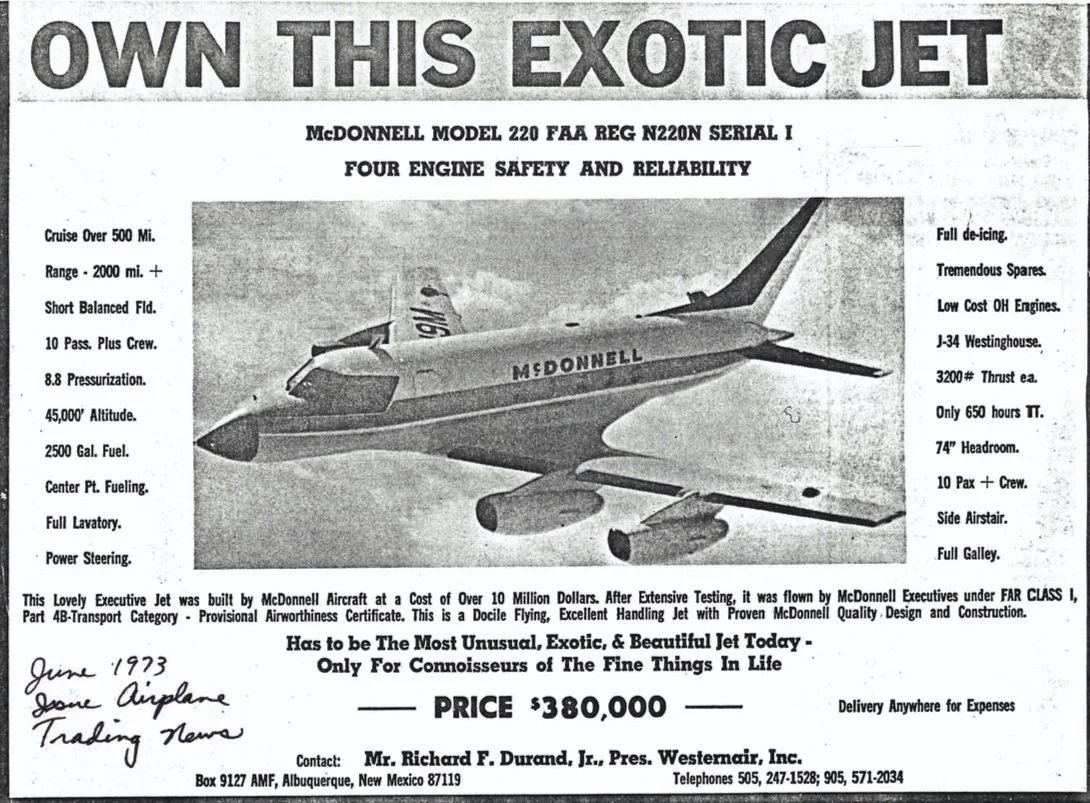
In June 1973, it appeared in a flamboyant Trade-A-Plane advertisement offering buyers the opportunity to own an “exotic jet.” The asking price was $380,000.
The advertisement promoted four-engine safety, a pressurized cabin, a 45,000-foot altitude capability, a full galley, an integral stairway, and the aircraft’s McDonnell construction. It claimed approximately 650 hours of total time and offered delivery anywhere at the buyer’s expense.
The airplane attracted attention, but not a quick sale.
A later history described it sitting in the weeds at the edge of Albuquerque International, declared unairworthy after an inspection by original project engineer Fred Steele.
The Albuquerque Phoenix
In 1974, Richard Archer of Washington State purchased the aircraft.
His ambition was to restore it to flight, install a new interior, repaint it, and return the one-of-a-kind jet to public view. Years passed before the effort gained momentum, but by the early 1980s several mechanics had worked on the aircraft’s systems and Westinghouse J34 engines.
An experimental airworthiness certificate was obtained.
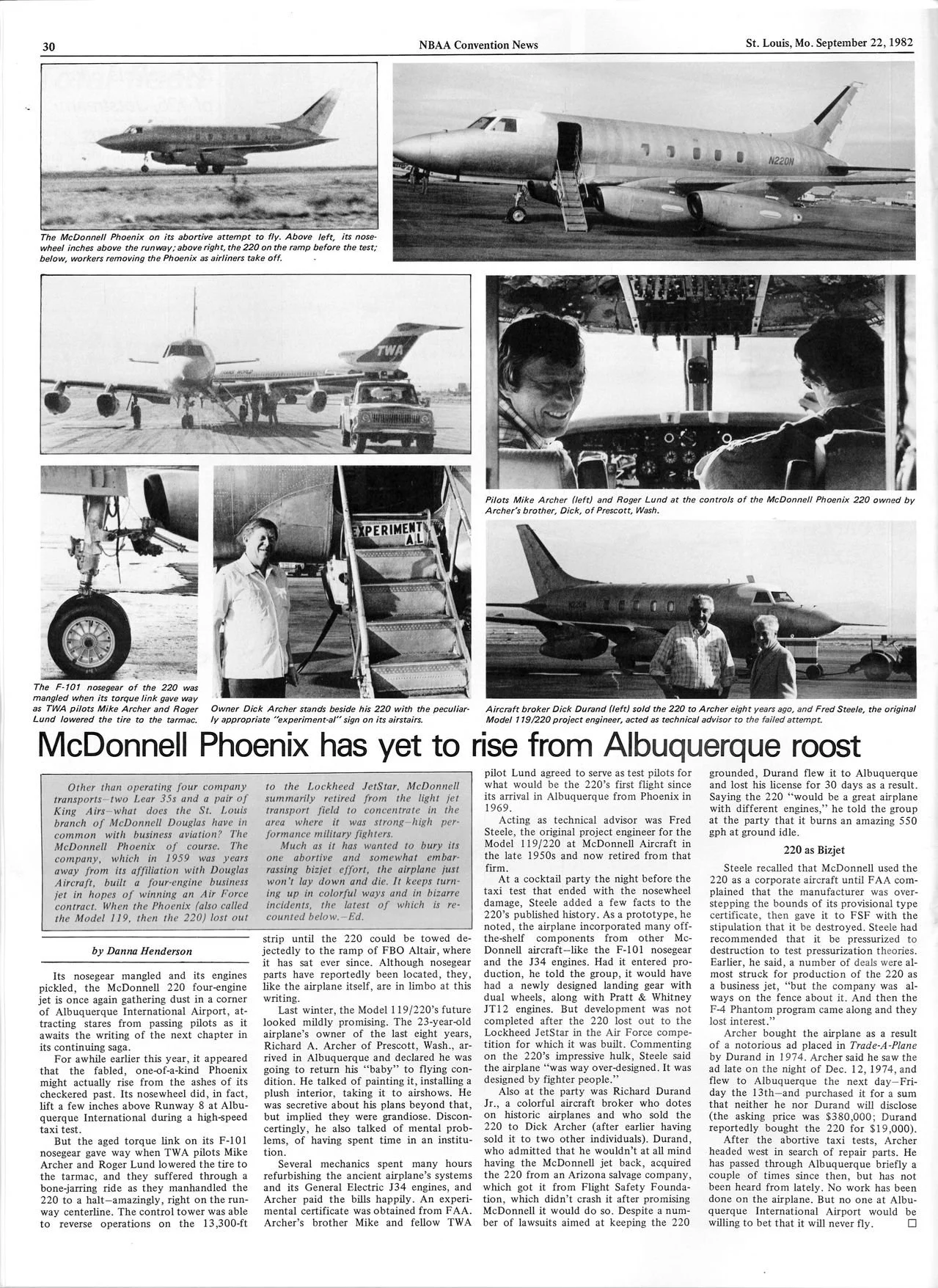
In 1982, two TWA pilots, Mike Archer and Roger Lund, prepared to conduct a high-speed taxi test as part of the effort to return the airplane to the air.
The test briefly appeared promising.
The nosewheel lifted several inches above the runway, suggesting that the aircraft was responding normally. When it came back down, however, an aged torque link in the F-101-derived nose-landing-gear assembly failed.
The pilots endured a violent ride but kept the aircraft near the runway centerline and brought it to a stop. The damaged 220 was towed back to the ramp.
The attempted resurrection had ended without a flight.
The incident inspired the headline “McDonnell Phoenix has yet to rise from Albuquerque roost,” a reference to the growing collection of names attached to the aircraft. It had been the Model 119, the Model 220, the Baby 707, and now the McDonnell Phoenix.
After the accident, work again slowed.
The airplane remained grounded, but it remained intact.
Rumors, Mexico, and the Missing Years
The Model 220’s unusual ownership history created fertile ground for rumors.
Stories circulated that it had flown covert missions in Latin America or South America. Some versions portrayed it as a secret transport for wealthy individuals or government interests.
No conclusive documentation has yet been found to substantiate the more dramatic accounts.
A 1997 internal McDonnell memorandum did record a statement from a former employee that the aircraft had “flown in Mexico for a while.” That may be the factual seed from which the later stories grew.
For now, the responsible conclusion is limited.
The 220 may have operated in Mexico during one period of its post-McDonnell life. Claims of covert missions elsewhere remain unverified.
The distinction matters. The surviving records are already remarkable enough without turning rumor into fact.
David Tokoph and the Return to Flight
In the late 1980s, the aircraft found the owner who would make the most serious effort yet to return it to service.
David Tokoph was an engineer, test pilot, aviation entrepreneur, and longtime El Paso businessman. He acquired the ‘220 and arranged for an extensive rebuild in Texas.
According to a 1997 McDonnell memorandum, the work was performed in El Paso by an organization experienced with Boeing 707 and Douglas DC-8 aircraft.
All four engines were rebuilt and returned to operating condition. The aircraft was completely rewired. Systems were inspected and restored. Brad Donner, an experienced pilot involved with the project, later described the workmanship as among the best he had encountered in an aircraft restoration.
The memorandum reported approximately 1,800 total hours on the airframe.
Following the rebuild, the 220 returned to the air. It was flown from El Paso to Midland, Texas, for repainting and later returned to El Paso.
The available record indicates that this final period of flight ended in 1998.
The Model 220 had flown again, over twenty years after many at McDonnell believed it had been destroyed.
The 1997 Museum Plan
By 1997, another effort was underway to place the aircraft in a museum.
Brad Donner was preparing for a possible flight of approximately 300 to 400 miles to the Fort Worth area. He was associated with the proposed destination and was expected to fly the aircraft.
The plan reached McDonnell Douglas through former employees who had worked on the original Model 119 program.
One of them, Ed Jeude, had designed part of the aircraft’s control system. He raised a specific concern about the aluminum alloy used in the rudder bellcrank. The hand-forged 7079 material was known to be susceptible to stress-corrosion cracking and had become unacceptable for use in later military aircraft.
McDonnell Douglas assembled specialists in metallurgy, nondestructive testing, and aircraft standards to consider the issue. Their conclusion was direct: if the aircraft had to fly, the bellcrank should be nondestructively inspected or replaced.
The group also asked a more fundamental question. Why risk flying a unique aircraft to a museum when its wings could be removed and the airplane transported by road?
The internal memorandum is especially valuable because it records the reappearance of original Model 119 personnel in the airplane’s story. Brad had contacted former pilot George Mills, who connected him with Fred Steele. McDonnell employees who had assumed the airplane was gone suddenly learned that it still existed and might fly again.
The museum plan did not proceed.
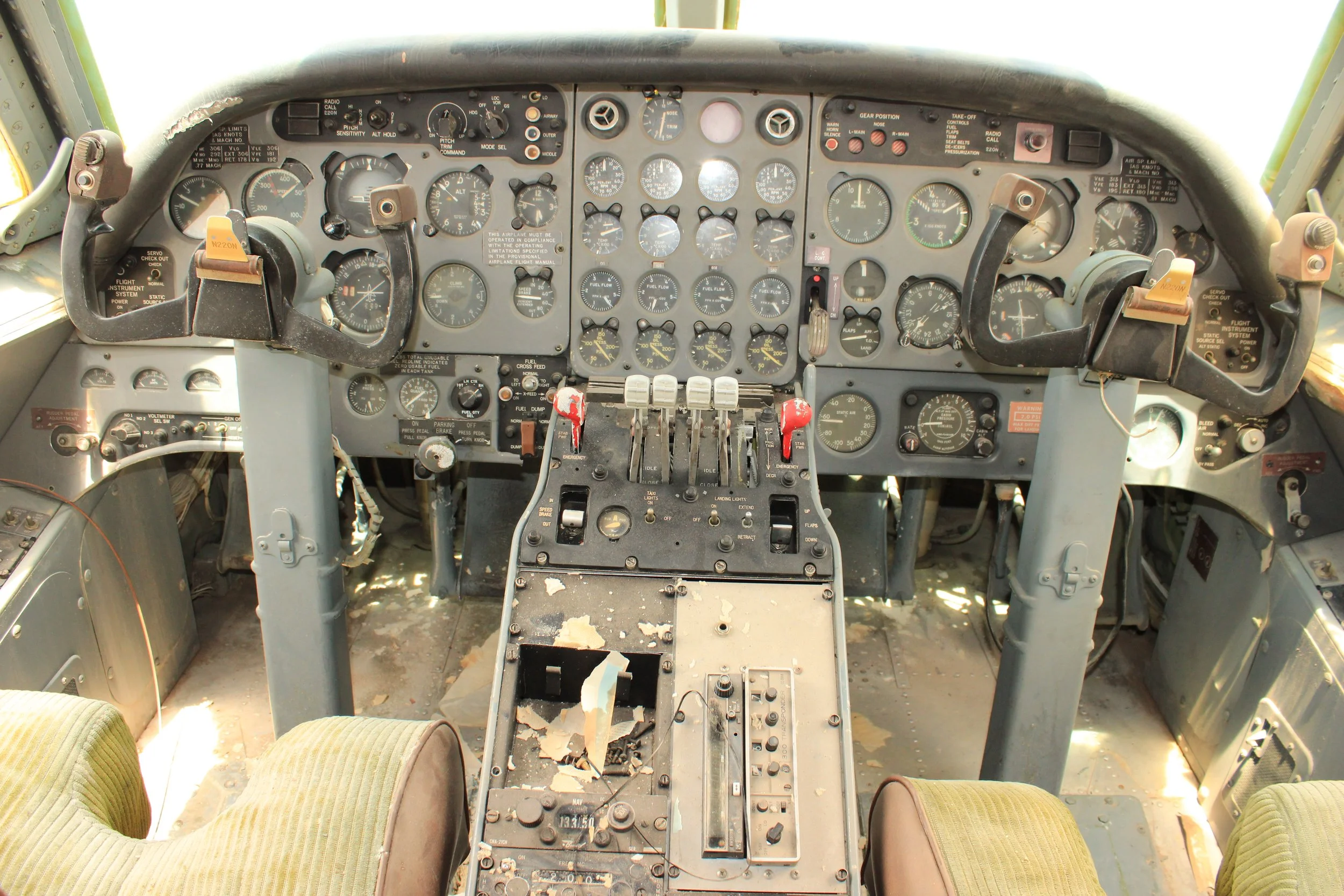
At that time, the aircraft was reported to have been stored indoors and to remain in excellent condition. In later years, it was moved outside, where exposure to the desert environment gradually took its toll.
Once again, the 220 remained where it was.
The El Paso Years
For decades, the Model 220 became a familiar but poorly understood presence at El Paso International Airport.
It carried the registration N4AZ and was associated for many years with Floatron Inc. Thousands of airline passengers, pilots, mechanics, and airport employees passed near it without knowing what it was.
Some assumed it was an old military transport. Others mistook it for a small airliner or an experimental foreign aircraft. Even dedicated aviation enthusiasts frequently had never heard of the McDonnell 220.
Its condition gradually declined.
Paint faded. Seals deteriorated. The interior and systems suffered from age and exposure. The airplane’s low-mounted engine nacelles, distinctive cockpit, and swept tail remained recognizable, but its significance was increasingly hidden beneath decades of weathering.
FAA records documented a transfer of ownership in 2022. In 2026, the aircraft was transferred to the City of El Paso, opening the possibility of a coordinated preservation effort.
For the first time in years, its future was no longer dependent on finding another private buyer willing to take responsibility for a unique, seventy-foot-long experimental jet.
The Save the ’220 Project
The Save the ’220 Project began with a simple conviction: this airplane was too important to lose.
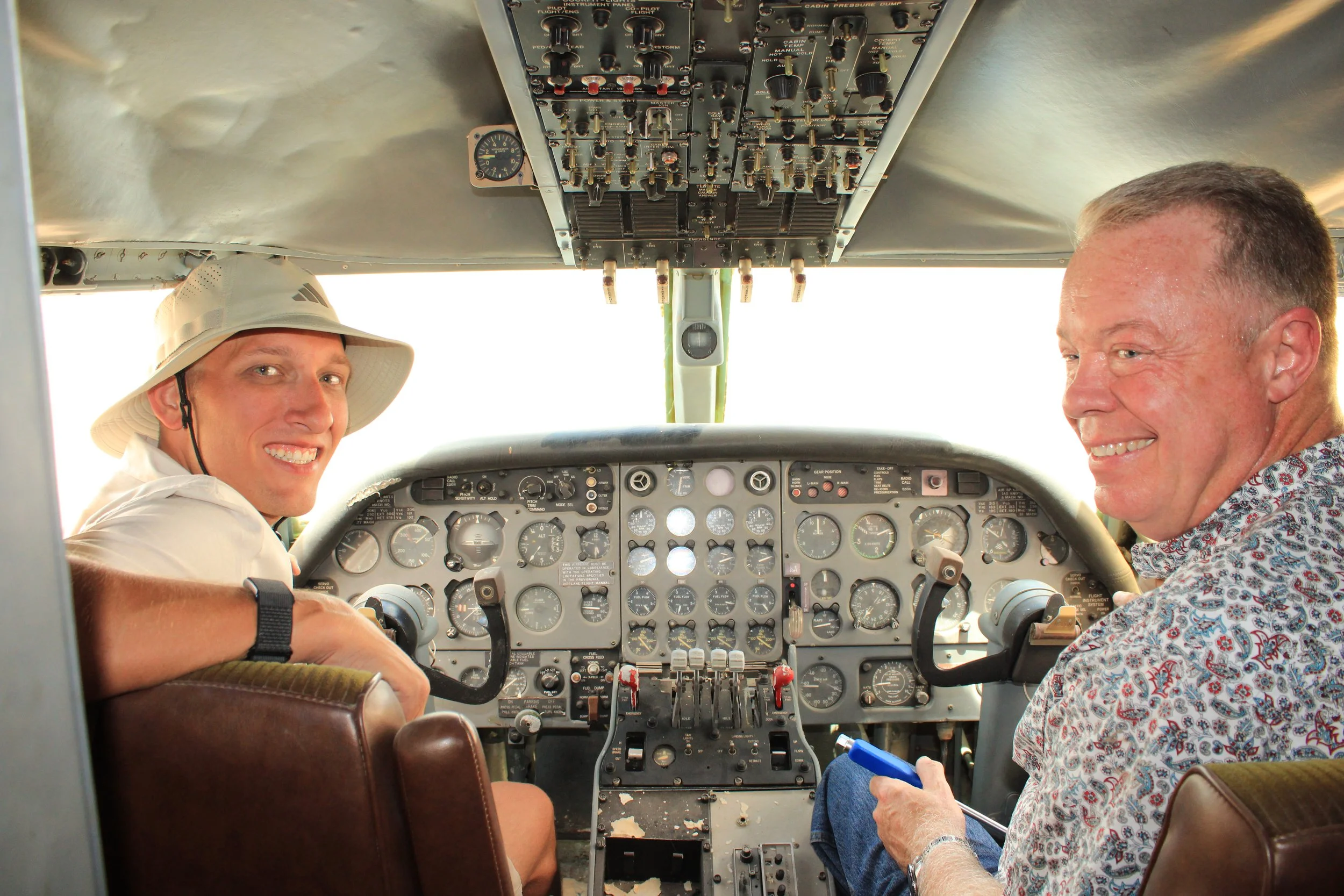
Project coordinator Anthony West had first encountered the aircraft years earlier while working as a pilot. He recognized it from an old aviation book while taxiing past it at El Paso, long before the idea of organizing a preservation effort had taken shape.
In 2026, concern over the aircraft’s future brought together pilots, historians, engineers, photographers, archivists, recovery specialists, former owners, former crew members, museums, and aviation enthusiasts.
Among those involved was Bradley Donner, the last pilot to fly the aircraft and a participant in earlier efforts to preserve it.
In July 2026, a team traveled to El Paso to conduct a detailed inspection. The group included West, Donner, an aircraft-recovery specialist, as well as project archivist and lead photographer Abby Brinker.
The inspection confirmed several crucial facts.
The aircraft’s major structure remained sound. Its wing had been designed in three principal sections and could be separated using conventional disassembly methods. The landing gear, tail, and hydraulic systems could be evaluated and supported. Nothing observed during the inspection made recovery appear impossible.
As the preservation specialist concluded:
“I do not see anything about this airplane that makes me say it can’t be done.”
The visit also produced an extraordinary archival discovery.
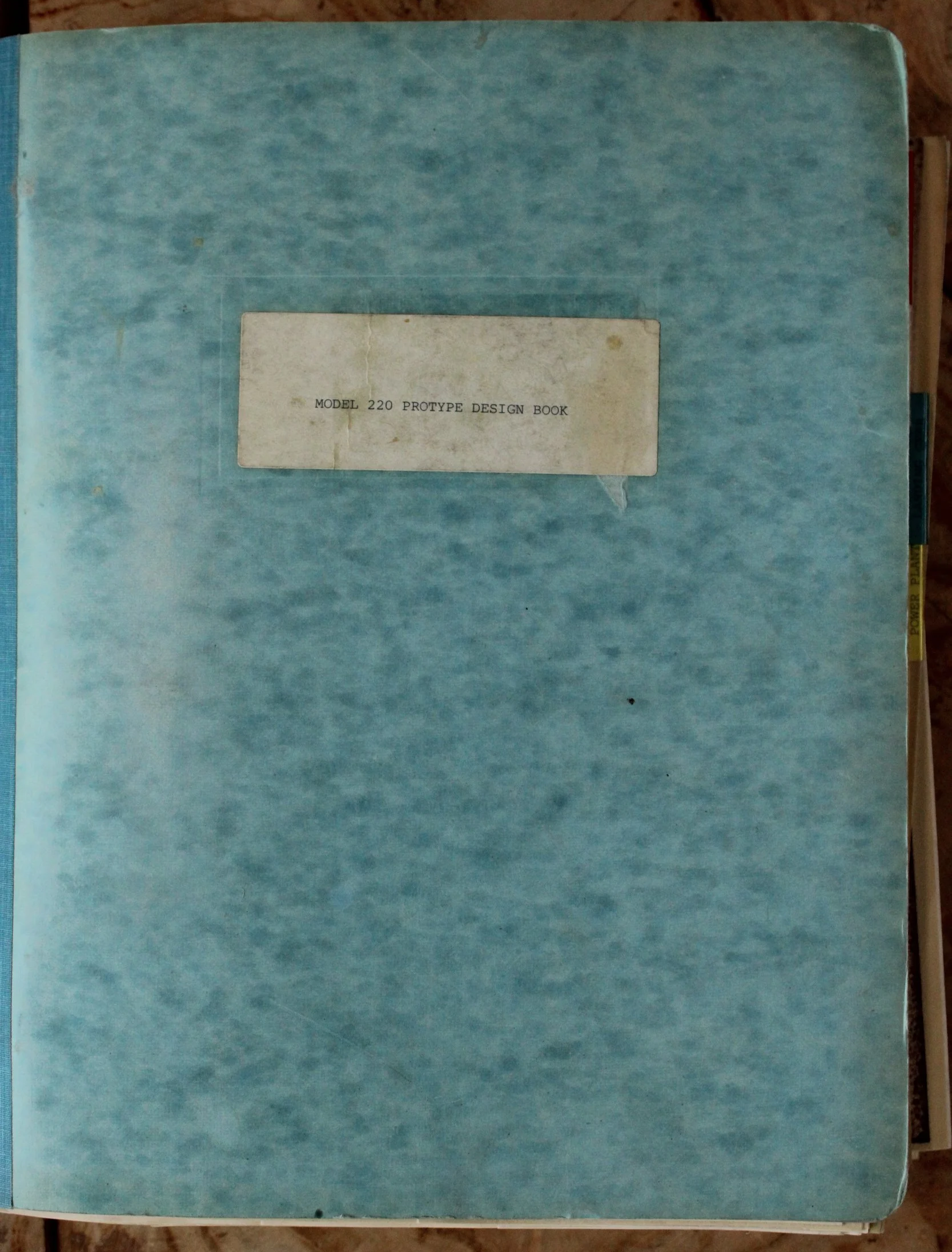
Among collections of documents preserved by people connected to the airplane was a blue binder titled Model 220 Prototype Design Book. It contained original McDonnell engineering drawings and detailed information about the aircraft’s structure and construction.
Additional binders contained systems drawings, schematics, technical documents, correspondence, and photographs. Together, the materials represented the most complete engineering record of the aircraft known to the project.
The documents were loaned for professional digitization and archival preservation. Hundreds of blueprint pages and aircraft photographs were recorded, with the goal of preserving not just the airframe, but the knowledge necessary to understand it.
The discovery changed the nature of the project.
Saving the 220 would no longer mean preserving only a weathered airplane. It would mean preserving the engineering story, the people who designed and flew it, the documents that explained it, and the long chain of individuals who had prevented its destruction.
Why the McDonnell 220 Matters
The Model 119/220 occupies a unique place in aviation history.
It was McDonnell Aircraft’s only serious attempt to develop and market a civil airplane before the company merged with Douglas Aircraft. It emerged at the beginning of the business-jet era, before the industry had established what a business jet should look like, how many engines it should have, or how such an aircraft should be sold.
Its design reflected the company that created it.
The four podded engines, robust structure, redundant systems, sharp nose, and operational flexibility all reveal the influence of military engineering. The luxurious cabin, stand-up interior, long range, and corporate marketing campaign anticipated an entirely new form of transportation.
It was an airplane caught between two worlds.
It was too civilian to fit comfortably within McDonnell’s military business, but too ambitious and expensive for the still-developing corporate aviation market. It lost the military order that might have made civilian production economical, then entered a commercial market that was not yet prepared to support it.
Its production career ended before it began.
Its physical existence did not.
The 220 survived commercial failure, corporate retirement, planned destructive testing, salvage ownership, years of abandonment, a controversial ferry flight, a failed high-speed taxi test, multiple museum proposals, and decades of exposure.
Only one was ever built.
That airplane still exists.
The purpose of the Save the ’220 Project is to ensure that it continues to exist, not merely as an unusual object, but as a preserved and documented chapter in the history of McDonnell Aircraft, business aviation, and the American Jet Age.
The Model 220’s story is not finished, because…